Commercial Cleanup in Raleigh: When Does a Business Need Junk Removal?

Business owners often notice the need for cleanup before they realize they need a full junk removal service. Clutter may begin with a few broken desks, outdated equipment, discarded materials, or items left behind after an office move. In my experience, Three Brothers Hauling & Logistics businesses benefit most when they address commercial clutter before it begins interfering with daily operations. That is where commercial cleanup in Raleigh becomes useful, particularly when unwanted materials are taking up valuable workspace or creating obstacles for employees.
The right time to arrange removal depends on the type and volume of materials, the condition of the property, and what the business plans to do next. An office relocation, renovation, tenant turnover, warehouse reorganization, property sale, or business closure can all create enough unwanted material to justify professional hauling. I look beyond the visible pile and consider how much labor, transportation, sorting, and disposal will actually be required.
Key Takeaways
Commercial clutter can interfere with productivity and usable space.
Office moves and renovations often create substantial unwanted material.
Large or heavy items can make self-removal impractical.
Property access and disposal requirements affect the cleanup process.
Early planning can reduce disruption during business transitions.
Recognizing When Commercial Clutter Has Become a Problem
One of the clearest signs is when unused items begin occupying space that the business could otherwise use. A storage room filled with obsolete furniture may seem harmless at first, but over time it can prevent employees from accessing necessary supplies or equipment.
I also look at how long an item has been sitting unused. If broken furniture, outdated fixtures, damaged shelving, or discarded materials have remained untouched for months, there is usually little reason to keep postponing the decision. Businesses often accumulate these items gradually, making the total amount harder to notice until someone finally needs the space.
Safety is another important consideration. Narrow walkways, blocked exits, unstable stacks, loose materials, and heavy objects stored in unsuitable locations can create avoidable risks. Even when clutter does not look particularly large, its location can make it a serious operational concern.
The same applies to outdoor commercial areas. Old pallets, damaged equipment, discarded construction materials, and unused fixtures can occupy parking areas, loading zones, or exterior storage spaces. Removing them can restore usable property without requiring a major renovation.
Office Moves and Renovations Create Major Cleanup Needs
Office relocations are among the most common situations where I see businesses underestimate the amount of material that needs to be removed. Desks, chairs, filing cabinets, shelving, conference tables, cubicles, and miscellaneous office equipment can quickly fill a truck.
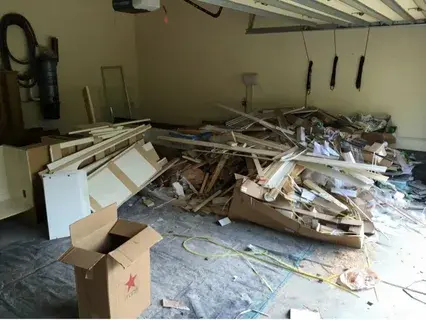
A renovation can create an even broader range of materials. Businesses may need to remove old cabinets, flooring materials, fixtures, furniture, partitions, and other non-hazardous debris before the updated space can be used.
The timing matters because businesses usually have deadlines attached to these projects. A lease may be ending, a new tenant may be waiting, or employees may need to return to the renovated space. Delaying cleanup until the final day can leave very little room for unexpected obstacles.
For that reason, I recommend planning removal alongside the larger project instead of treating it as an afterthought. Once the business knows what is staying, what is moving, and what is being discarded, the cleanup scope becomes much easier to estimate.
When Raleigh Businesses Should Consider Professional Removal
For businesses researching commercial junk removal in Raleigh, the decision often comes down to labor, volume, and access. A small amount of lightweight material may be manageable internally, but a large quantity of bulky items can quickly become a time-consuming project.
I would also consider employee responsibilities. Asking employees to move heavy furniture or equipment can take them away from their normal work and may create unnecessary lifting risks. When several people need to spend hours carrying material to a dumpster or vehicle, the apparent savings from handling it internally may be smaller than expected.
Access is another deciding factor. A business located on an upper floor, inside a multi-tenant building, or behind a restricted loading area may require additional coordination. Elevators, stairs, parking restrictions, loading docks, and building rules all influence how efficiently material can be removed.
The disposal destination matters as well. Different materials may have different handling requirements, particularly when a cleanup contains electronics, appliances, metal, cardboard, furniture, or construction-related materials. Sorting these categories before removal can make the process more organized.
Signs a Business May Need Removal
Storage areas are filled with unused furniture or equipment.
Old materials are occupying employee workspaces.
A renovation has produced more debris than staff can handle.
Large items cannot be safely moved with available resources.
A property must be cleared before a lease or sale deadline.
Planning Cleanup Before a Business Transition
A business transition is usually easier when cleanup happens in stages. I like to begin with an inventory of everything that may leave the property, then separate items based on whether they will be reused, donated, recycled, relocated, or discarded.
This approach is particularly useful during downsizing. A company may not need every desk, chair, filing cabinet, or storage unit after moving into a smaller space. Deciding what stays before removal begins prevents unnecessary transportation of items that will eventually be discarded.
For businesses considering office cleanout services in Raleigh, scheduling is just as important as the physical work. A cleanup performed during peak operating hours may disrupt employees, customers, deliveries, and normal business activity.
Whenever possible, I recommend choosing a removal window that creates minimal interference. Depending on the property, that could mean early morning, late afternoon, a weekend, or a period when fewer employees are present.
Documentation can also help. Taking photos of large furniture, storage areas, and difficult access points gives everyone a clearer understanding of the project before removal begins.
What Affects the Scope and Cost of Commercial Cleanup?
Commercial cleanup does not have a single standard price because every property presents different conditions. The amount of material is important, but volume alone does not tell the entire story.
Weight, dimensions, labor requirements, carrying distance, stairs, elevators, loading access, and disposal methods can all influence the scope. A small number of extremely heavy pieces may require more work than a large quantity of lightweight cardboard and packaging.
Truck capacity also matters. Bulky furniture can consume significant space even when it is not particularly heavy. A collection of desks, cubicles, chairs, and cabinets may require more vehicle capacity than the item count initially suggests.
I also consider whether the business can prepare the material before the crew arrives. Removing personal belongings, organizing documents, separating electronics, and clearing pathways can make the physical removal more straightforward.
The best way to compare estimates is to look at what each option actually includes. A low initial price may not represent the same amount of labor, transportation, sorting, or disposal as a more comprehensive estimate.
Factors to Review Before Scheduling
Estimate the volume and type of unwanted materials.
Identify stairs, elevators, loading docks, and restricted areas.
Separate reusable and recyclable materials where practical.
Consider whether removal will disrupt normal operations.
Confirm the project deadline before choosing a removal date.
Special Situations That Often Require Commercial Cleanup
Business closures can create especially large cleanup projects because nearly everything inside the property may need to be evaluated. Furniture, shelving, equipment, supplies, displays, fixtures, and miscellaneous materials can accumulate over years of operation.
Tenant turnover presents another situation. When one occupant leaves a commercial property, unwanted materials may remain behind. Clearing the space promptly can help prepare it for repairs, showings, or the next tenant.
Warehouse reorganizations can create similar challenges. Pallets, damaged inventory, outdated storage equipment, packaging materials, and unused fixtures can consume floor space that the business needs for active inventory.
Retail businesses may also need periodic removal after remodeling or store changes. Displays, shelving, counters, signage materials, and outdated fixtures can become difficult to store when a business has limited back-room space.
How to Make the Cleanup More Efficient
The first practical step is to designate one person to coordinate the project. When several employees make separate decisions about what should stay or go, confusion can slow down the process.
I also recommend marking items before the removal date. Simple labels such as "keep," "relocate," "donate," or "remove" can prevent mistakes when multiple categories of property are being handled at once.
Another useful tactic is to clear a defined route from the material to the exit. Loose boxes, cords, supplies, and other obstacles can make furniture removal harder than necessary. Creating a clear path improves movement and reduces the chance of accidental damage.
Businesses should also identify restricted materials before scheduling. Certain chemicals, hazardous substances, or regulated materials may require specialized handling and should not be mixed into an ordinary junk removal project.
Final Cleanup Preparation
Assign one person to coordinate the removal.
Label items according to their intended destination.
Clear pathways before heavy materials are moved.
Photograph large or difficult-to-access areas.
Identify materials requiring specialized handling in advance.
Frequently Asked Questions
How do I know if my business has enough junk to need commercial removal?
There is no specific minimum amount. If unwanted furniture, equipment, debris, or other materials are consuming useful space, creating safety concerns, or requiring significant employee labor to move, professional removal may be worth considering.
Can commercial junk removal include office furniture?
Yes, many commercial cleanup projects include desks, chairs, filing cabinets, shelving, conference tables, and other unwanted workplace furniture. The exact materials accepted depend on the removal provider and disposal requirements.
Should a business remove junk before or after moving?
Ideally, unwanted materials should be identified before the move and removed during the transition. This prevents businesses from paying to transport items that they already know they do not want.
Can a commercial cleanup be scheduled outside business hours?
Depending on the property and removal provider, after-hours or weekend scheduling may be possible. Building access rules, loading restrictions, and property management requirements should be confirmed beforehand.
What should businesses do with sensitive documents?
Confidential paperwork should be handled according to the company's privacy and records-retention policies. Businesses should not assume that ordinary junk removal is an appropriate method for destroying sensitive records.
Final Thoughts
I have found that businesses rarely regret planning commercial cleanup early, but they often regret waiting until a deadline is close. Once unwanted furniture, equipment, and debris begin taking over usable space, the cleanup becomes more than a cosmetic task.
The most important step is to understand the actual scope. Businesses should consider what needs to leave, how difficult it will be to remove, when the work can happen, and how the materials should be handled afterward.
A well-organized commercial cleanup in Raleigh can support an office move, renovation, downsizing project, property transition, or routine workspace reorganization without turning the process into a last-minute scramble. Planning ahead gives the business more control over time, labor, access, and overall project coordination.
Plan the Commercial Cleanup
If your business has accumulated unwanted furniture, equipment, debris, or other materials, contact the hauling team to discuss the scope of the cleanup. Share the property type, approximate volume, large-item details, access conditions, and preferred timing. Photos can also help clarify the project before scheduling. A clear removal plan can reduce disruption, keep employees focused on their normal responsibilities, and help ensure the property is ready for its next stage without unnecessary delays.